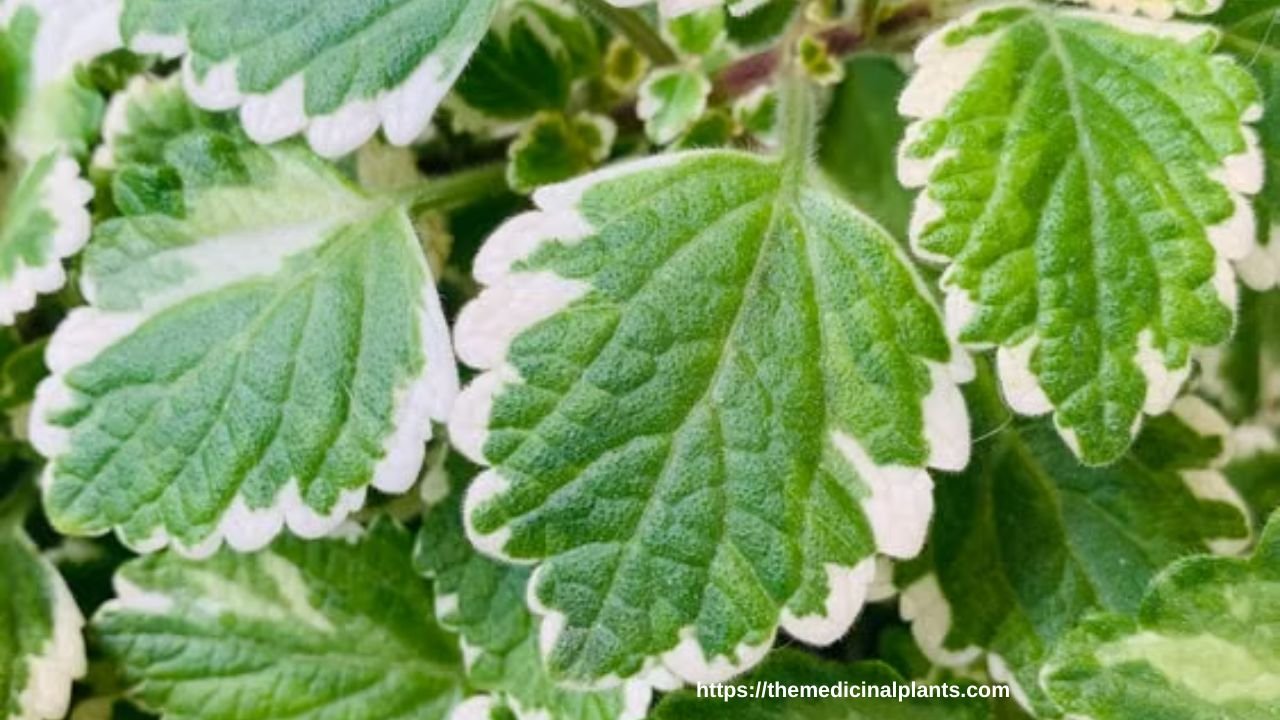
Plectranthus verticillatus, commonly known as Swedish Ivy, is a beautiful, fast-growing hanging plant. It is a small, bushy or trailing plant often grown for decorative purposes in hanging pots, on windowsills, or on shelves. Its leaves are round to oval, dark green, slightly glossy, and often feature serrated edges. The stems are soft, tend to trail, and can root at various points, allowing the plant to spread quickly. Swedish Ivy prefers indirect light, moderate moisture, and well-draining soil; Excessive watering should be avoided.
Scientific Name: Plectranthus verticillatus
Some Basic Information about Plectranthus verticillatus (Swedish Ivy) - Indoor hanging plant
Habit- Perennial, evergreen, trailing or creeping herb, usually 30–100 cm in length; forms dense cascading mats or hanging foliage and may spread over the ground or trail from containers, making it a popular ornamental hanging plant
Root- Fibrous and adventitious, arising from the stem base and nodes; roots develop readily at the nodes when stems come into contact with moist soil, facilitating rapid vegetative propagation
Stem- Trailing, succulent to semi-herbaceous, quadrangular (four-angled), highly branched, green to reddish-green, smooth, flexible, and becoming slightly woody at the base with age
Leaf- Opposite, petiolate, simple, broadly ovate to orbicular, 3–7 cm long; margin crenate to serrate, exstipulate; leaves thick, fleshy, glossy, bright green with prominent veins, rounded apex, and a soft texture
Inflorescence- Terminal or axillary verticillasters (false whorls) arranged in elongated racemes, bearing numerous small flowers
Flower- Bracteate, complete, zygomorphic, bisexual, hypogynous; flowers small, white, pale lavender, or bluish-white, often marked with violet spots on the lower lip
Calyx- Sepals 5, gamosepalous, tubular, persistent, bilabiate, with valvate aestivation
Corolla- Petals 5, gamopetalous, bilabiate; upper lip short and two-lobed, lower lip three-lobed and spreading; white to pale lavender in color, with imbricate aestivation
Androecium- Stamens 4, epipetalous, didynamous (two long and two short), inserted on the corolla tube; anthers dithecous, dehiscing longitudinally
Gynoecium- Ovary superior, bicarpellary, syncarpous, deeply four-lobed with axile placentation; style single, gynobasic, stigma bifid
Fruit- Schizocarp, splitting into four one-seeded nutlets enclosed within the persistent calyx
Floral Formula: Br % ⚥ K(5) C(5) A4 G̲(2)
Systematic Position
Division – Angiospermae
Class – Dicotyledonae
Order – Lamiales
Family – Lamiaceae
Genus – Plectranthus
Species – verticillatus
Related article
- Comparison Between Hoya, Burro’s Tail, and Wandering Jew Hanging Plants
- Hanging plant- Inch Plant: Floral formula
- Hanging plant- Burro’s Tail: Floral formula
- Hanging plant-Hoya: Floral formula
- Hanging plant-hedera helix: Floral formula
- Hanging plant-Boston Fern: Floral formula
- Hollyhock (Alcea rosea): Plant overview and floral formula
- Helianthus annuus floral formula
- Chillies and Peppers at Home – Step-by-Step Guide
- Tomato at home – step to step Guide
- Chives at Home – Step-by-Step Guide
- Conophytum Succulents at Home: Step-to-Step guide
- Edamame (Young Soybeans)
- Lettuce at Home: Step-to-Step guide
- Brassica campestris at home step to stpe guide